

Ventura County’s Premier Mental Health Treatment Center
Intensive Outpatient Programs | PHP/IOP
Teens and Adults
Anxiety, OCD, Trauma and Depression
The Mental Health Treatment You Need to Get Your Life Back
Comprehensive
Treatment
Anxiety, Trauma and Depression
Evidence-Based Intensive Programs
Specialized
Treatment
OCD
ERP-DBT-ACT-Inhibitory Learning
Here is Where Your Mental Health Thrives
Anxiety, Trauma & Depression Treatment Centers has been helping people just like you or a loved one when it seems that nothing else is working. When current treatment is not showing the progress needed to help you or a loved one thrive and you are beginning to feel hopeless, it’s time to take a different mental health treatment in Ventura. Anxiety, Trauma & Depression Treatment Centers is an Intensive Outpatient facility. Our Intensive Outpatient Programs (IOP and PHP) are specifically designed to help you or a loved one address issues, heal trauma and set you free to flourish.

We Accept Most Insurance
(We are unable to accept Medi-Cal, Gold Coast or Medicare)


Intensive Outpatient Programs, PHP/IOP
Treating Anxiety, OCD, Trauma and Depression



Anxiety, Trauma & Depression Treatment Centers Exclusive Resilience Model

The Anxiety, Trauma & Depression Treatment Centers Resilience Model is centered on you, or your loved one, and is built on a deep understanding of how mental health challenges are rooted in the nervous system, not just behavior or thought patterns. As trust develops, treatment becomes more personalized, helping each client feel safe enough to begin meaningful, lasting change. Rather than relying solely on traditional talk therapy, our approach integrates evidence-based modalities with a focus on nervous system regulation, emotional resilience, and trauma-informed care. We help clients understand how anxiety, depression, and other mental health symptoms are often the result of dysregulation, when the brain and body become overwhelmed and stuck in patterns of survival. At Anxiety, Trauma & Depression Treatment Centers, the goal is not just symptom management, it’s transformation. By strengthening resilience at the nervous system level, clients leave treatment with the tools, insight, and confidence to navigate life in a more grounded, regulated, and sustainable way. The Anxiety, Trauma & Depression Treatment Centers’ Resilience Model of IOP includes:
Evidence-Based, Solution-Focused Therapies
- Cognitive Behavioral Therapy (CBT)
- Eye Movement Desensitization & Reprocessing (EMDR)
- Acceptance & Commitment Therapy (ACT)
- Dialectical Behavior Therapy (DBT)
- Emotional Regulation Therapy
- Psychodynamic Therapy
- Motivational Therapy
- Group Therapy
- Family Therapy
- Individual Therapy
Experiential Therapies
- Art
- Music
- Animal Care
- Role Playing
- Coping Skills
- Awareness
Holistic Therapies
- Somatic Therapy
- Mindfulness
- Hemi-Sync
- Yoga
- Meditation
- Connections
- Rational Thought
- Balance
Take Back Your Life From OCD
OCD makes everyday life feel like a constant struggle with unwanted thoughts, overwhelming fears, and the urge to do things repeatedly just to feel certain or safe. But you or a loved can learn to respond differently—and stop allowing OCD to dictate choices.
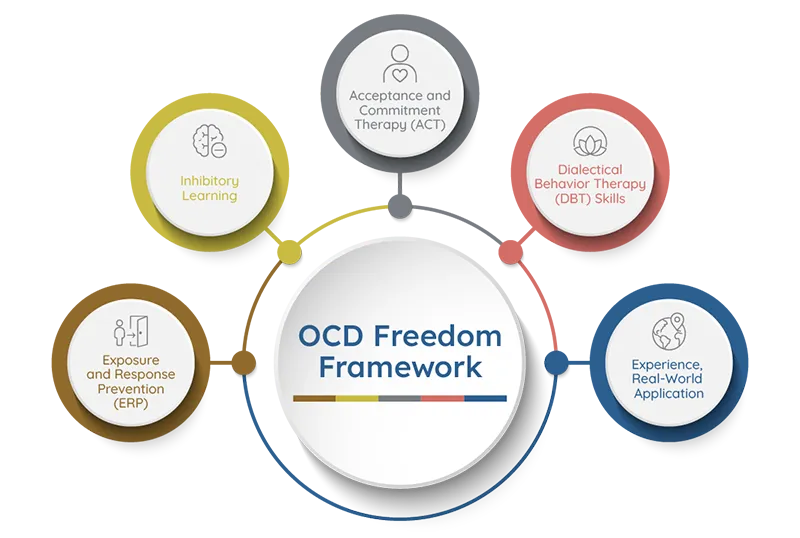
At Anxiety, Trauma & Depression Treatment Centers, we use a specialized approach that brings together Exposure and Response Prevention (ERP), the gold-standard treatment for OCD, with practical strategies drawn from acceptance-based approaches, DBT skills, and real-world exposure experiences. Our Freedom Framework helps you build the ability to face uncertainty, tolerate uncomfortable feelings, and move forward without giving OCD the final say.
The goal isn’t to eliminate every unwanted thought or never feel anxious again. It’s to help you reclaim the freedom to make decisions, participate in relationships, and live according to what matters to you—not according to what OCD demands.
OCD Symptoms and Challenges We Treat
- Obsessive and intrusive thoughts
- Contamination fears
- Harm-related obsessions
- Fear of uncertainty and doubt
- Compulsive behaviors and rituals
- Reassurance seeking
- Relationship-focused OCD concerns
- Health-related obsessions and anxiety
- Mental compulsions and repetitive thinking
- Religious or moral obsessions
- Perfectionism and fear of making mistakes
- Avoidance of feared situations
- Repetitive checking behaviors
Not Sure if it’s OCD Controlling Your Life? Take Our Quiz
Anxiety, Trauma and Depression Treatment Centers understand what their obsessive and intrusive thoughts mean and how they are affecting their lives. Take our short OCD self-assessment to explore your symptoms, better understand your experiences, and learn whether our specialized, highly successful OCD treatment may be right for you.

Virtual IOP Available for Teens, Young Adults, and Adults
If travel and times are not convenient, we offer virtual IOP for teens, young adults, and adults. Our admissions coordinators are experts in helping you find the best schedule to meet your needs.
Proven Mental Health Treatment in Ventura
Your Diagnosis, Our Expertise
The clinical staff at Anxiety, Trauma & Depression Treatment Centers have years of experience helping people just like you overcome their conditions and lead a fulfilling life free from the mental challenges of the past. Our successful Intensive Outpatient Programs cover the following conditions:
If you don’t see your diagnosis, please call, we can help.

Help Is Here for You or a Loved One to Thrive
You are here because it feels as if nothing else has been working. You will know the minute you call us that we are the right place for you or a loved one to finally get the care and help they deserve. Our success is measured one patient at a time, and nothing gives us greater pleasure than helping people live the life they so desperately deserve free of debilitating mental conditions.
Success Stories, Yours is Next!
The team at Anxiety, Trauma & Depression Treatment Centers has been able to support me in an intensive outpatient treatment program as well as supporting me and my family in an emergency mental health crisis. I greatly appreciate all the help I have received from Dr. Hopkin’s team. I highly recommend this practice.
Jim B.
Happy I found Anxiety, Trauma & Depression Treatment Centers. I met some really good people that I will keep in touch with. The group therapy was the best!!! I learned a lot about myself.
Eddie M.
I strongly endorse Anxiety, Trauma & Depression Treatment Centers. Dr Allison was very helpful. She spoke to me at great length of the services and solutions available to me at CIMHC. Look no further.
Bill C.
Well educated in their field. I learned a lot and the therapists truly helped me.
Debbie H.

Frequently Asked Questions
Who can benefit from your IOP?
Do you accept insurance for your mental health treatment in Ventura?
Yes, we accept most insurance plans. Our admissions coordinators can assist in verifying your insurance benefits and determining coverage options for our Intensive Outpatient Programs.
What types of therapies are offered in your IOP?
Our IOP includes a range of evidence-based and experiential therapies such as:
- Cognitive Behavioral Therapy (CBT)
- Eye Movement Desensitization & Reprocessing (EMDR)
- Acceptance & Commitment Therapy (ACT)
- Dialectical Behavior Therapy (DBT)
- Psychodynamic Therapy
- Motivational Therapy
- Group Therapy
- Family Therapy (Sunshine Club)
- Individual Therapy
- Experiential Therapies (art, music, animal care, role-playing, coping skills, awareness)
Is virtual treatment available?
How do I know if IOP is right for me or my loved one?
How long does the IOP program last?
What happens after completing the IOP mental health treatment in Ventura?
Frequently Asked Questions About Our PHP Program
What is a Partial Hospitalization Program (PHP)?
A Partial Hospitalization Program (PHP) is a structured, intensive mental health treatment program that provides a higher level of care than traditional outpatient therapy or an Intensive Outpatient Program (IOP). At Anxiety, Trauma & Depression Treatment Centers, PHP provides approximately 5–6 hours of treatment per day, five days a week. Participants receive comprehensive therapeutic support during the day and return home in the evening, allowing them to continue practicing the skills they learn in their everyday environment.
Who is a good candidate for the Anxiety, Trauma & Depression Treatment Centers PHP program?
PHP may be appropriate for adolescents, young adults, and adults experiencing significant mental health symptoms that interfere with daily life. It can be especially helpful for individuals transitioning from inpatient hospitalization or residential treatment who still need substantial clinical support but are ready to return home each evening. It may also be appropriate for people who need more intensive treatment than weekly therapy or IOP can provide. Our clinical team can help determine whether PHP is the right level of care.
What mental health conditions does the PHP program treat?
Anxiety, Trauma & Depression Treatment Centers PHP provides treatment for a range of mental health challenges, including anxiety, depression, trauma, PTSD, obsessive-compulsive symptoms, and difficulties with emotional regulation. Treatment is individualized to address each person’s symptoms, history, and goals. Our approach combines evidence-based therapies with experiential and holistic interventions to support emotional well-being and everyday functioning.
What types of therapy and treatment are included in PHP?
The Anxiety, Trauma & Depression Treatment Centers PHP program combines several therapeutic approaches to provide comprehensive support. Treatment may include daily group therapy and psychoeducation, weekly individual therapy, family or caregiver involvement when appropriate, and access to psychiatric evaluation. Evidence-based modalities include Cognitive Behavioral Therapy (CBT), Dialectical Behavior Therapy (DBT), Acceptance and Commitment Therapy (ACT), and trauma-focused interventions such as EMDR. Experiential services may also include art, music, mindfulness, meditation, yoga, and somatic strategies.
What is the difference between PHP and IOP, and how do I know which one I need?
PHP offers a more intensive level of treatment, generally involving five days of programming per week for approximately 5–6 hours each day. IOP provides a more flexible schedule, with approximately nine hours of treatment per week, making it an option for individuals who need ongoing support while balancing work, school, or family responsibilities. PHP may be recommended when symptoms are more disruptive or when someone is stepping down from hospital or residential care. The clinical team will help assess your needs and recommend the most appropriate level of treatment.
Frequently Asked Questions About OCD Treatment
What is the OCD Freedom Framework?
The OCD Freedom Framework is a comprehensive approach to treating Obsessive-Compulsive Disorder (OCD) that helps you change how you respond to unwanted thoughts, fears, and compulsive urges. At Anxiety, Trauma & Depression Treatment Centers, the approach brings together five complementary components: Exposure and Response Prevention (ERP), Inhibitory Learning, Acceptance and Commitment Therapy (ACT), Dialectical Behavior Therapy (DBT) skills, and real-world practice. Together, these strategies help you face anxiety and uncertainty, resist compulsive behaviors, and begin making choices based on what matters to you rather than what OCD demands.
What is Exposure and Response Prevention (ERP), and why is it important for OCD treatment?
Exposure and Response Prevention (ERP) is the gold-standard behavioral treatment for OCD and the foundation of the OCD Freedom Framework. ERP helps you gradually confront situations, thoughts, or triggers that cause anxiety while learning to resist the compulsions or rituals you would normally use to feel safe or certain. Treatment begins with a personalized plan and manageable steps, allowing you to practice at a pace appropriate for your needs. Over time, ERP helps you build confidence in your ability to experience discomfort and uncertainty without allowing OCD to control your behavior.
How does the OCD Freedom Framework help beyond traditional ERP?
ERP is central to treatment, but the OCD Freedom Framework incorporates additional skills to help you apply what you learn in everyday life. Inhibitory Learning strategies help you develop new experiences with feared situations and uncertainty. ACT teaches you to allow unwanted thoughts and feelings without letting them determine your decisions. DBT skills provide practical tools for emotional regulation, mindfulness, and tolerating distress. Real-world practice helps you use these skills in the situations where OCD has been limiting your life. Each component supports the others as you work toward greater independence from OCD.
What types of OCD symptoms and behaviors can the program address?
OCD can look different from one person to another. Some people experience contamination fears and repetitive cleaning or washing, while others struggle with checking, intrusive thoughts, harm-related fears, relationship-focused obsessions, health anxiety, religious or moral concerns, symmetry, ordering, or mental compulsions. Some people also spend significant time seeking reassurance, avoiding situations, or mentally reviewing events to feel certain. The OCD Freedom Framework addresses the patterns behind these experiences and helps you develop healthier ways to respond to obsessive thoughts and compulsive urges.
Will I learn how to manage OCD symptoms outside of treatment?
Yes. An important part of the OCD Freedom Framework is learning to apply your skills in the environments and situations where OCD affects your daily life. With appropriate guidance, real-world practice may involve resisting the urge to repeatedly check something, allowing an intrusive thought to pass without analyzing it, or approaching a situation you have been avoiding. Treatment also emphasizes building the confidence to tolerate uncertainty without relying on compulsions or constant reassurance. The goal is not to eliminate every unwanted thought, but to help you live a fuller life without letting OCD make your decisions.